
IndiGo operates 125 flights across 17 destinations with a fleet of 19 brand new Airbus A-320 aircraft. For the full service carrier, Kingfisher, the drop on flights up to 750 km will be Rs 400 to Rs 1,950 from Rs 2,350 earlier. Fares for travelling above 750 km will be down to Rs 2,700 from Rs 3,100.
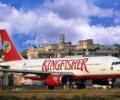
Mallya's airline is the second domestic carrier to have received DGFT approval for ATF import after budget carrier SpiceJet.
On October 31, the government exempted jet fuel from 5 per cent import duty. Indian Oil, Bharat Petroleum and Hindustan Petroleum cut jet fuel or aviation turbine fuel price from November 1 in Delhi by Rs 9,429.87 per kl to Rs 47,017.93 per kl, in line with fall in international oil prices.
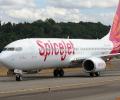
Reliance Industries Ltd is likely to import jet fuel for SpiceJet.
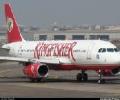
Seeking permission for direct import of jet fuel, Kingfisher Airlines has informed the government that steps are being taken to improve cash flow of the debt-ridden carrier by procuring ATF through suppliers' credit on lower interest rates.
Hike comes on back of a massive 6.14 per cent increase in rates effective from March 16 in line with rising crude oil prices.

State-owned oil firms on Tuesday cut jet fuel, or ATF, prices by 4 per cent, the first reduction in rates since July, on softening of international oil prices.

After the two hikes, the ATF prices had risen to above September levels, the official said. The three oil firms revise jet fuel prices on the first and the 16th day of every month based on the average global oil price in the previous fortnight.
According to the formula being worked out, the company would raise the fuel charge by Rs 50 for every Rs 1,000-per-kilolitre increase in the rates of jet fuel. Inversely, there would be a slide in the fares by the same amount in case of a Rs 1,000-per-kl decrease.

State-owned oil firms on Tuesday hiked jet fuel by 5.5 per cent in sync with rise in global rates.
Jet fuel prices were on Thursday hiked by 3.8 per cent, the second increase in rates in as many months.
The decision came following the intervention of Civil Aviation Minister Vayalar Ravi who met Petroleum Minister S Jaipal Reddy to sort out the issue.
Oil companies last week sent a notice for stopping aviation turbine fuel supplies to Air India at some airports like Calicut and Jaipur, officials said in New Delhi.

Currently open access to ATF facilities exists at Delhi, Hyderabad and Bangalore airports, sources said on the sidelines of the Petrotech 2012 Conference in New Delhi.

The state-owned oil firms on Wednesday hiked jet fuel prices by a huge 3.6 per cent to Rs 46,876.58 per kl, making it the fifth straight increase in rates since October when international crude oil prices started rising.

The price of aviation turbine fuel, or jet fuel, in Delhi was hiked by Rs 1,039.1 per kilolitre, or 1.7 per cent, to Rs 62,208.18, according to Indian Oil Corp, the nation's largest oil firm.
The price of aviation turbine fuel, or jet fuel, in Delhi was hiked by Rs 2,797.41 per kilolitre (kl), or 4.5 per cent, to Rs 65,005.59, according to Indian Oil Corp, the nation's largest oil firm.
Aviation Turbine Fuel or jet fuel in Delhi, the city that houses the nation's second busiest airport, costs $1,291 per kilolitre while the same in Singapore is sold at $1,067 per kl. It costs $1,100 per kl in Hong Kong and $1,113 in Colombo.
ATF price in Delhi has been raised to Rs 53,309.30 per kilolitre from Rs 47,048.86 per kilolitre, an Indian Oil Corporation, the nation's largest fuel retailer, said. In Mumbai, the price rose by Rs 6,536.35 a kilolitre to Rs 55,191.58 per kilolitre.
Airfares on major domestic routes such as Kolkata-Bagdogra, Delhi-Bengaluru, and Delhi-Mumbai have witnessed an increase of up to 12.7 per cent year-on-year (Y-o-Y) in May this year, according to data by Thomas Cook (India) and SOTC Travel. The recent increase in aviation turbine fuel prices, rupee depreciation, reduction of flights by key players, and grounding of planes due to engine supply issues have contributed to the rise in airfares, said aviation industry experts. However, the data also shows that summer airfares on key routes such as Delhi-Leh and Delhi-Kolkata have significantly decreased due to the introduction of new flights.

State-owned oil firms on Friday hiked jet fuel prices by almost 2 per cent, the sixth straight increase in rates since October when international crude oil prices started climbing.

In a meeting with stakeholders last week, the authority mooted setting up a Special Purpose Vehicle along with airlines and state-owned oil marketing companies to develop common infrastructure to import ATF, among others, at Chennai and Kolkata airports. While AAI and OMCs will hold 76 per cent in the proposed SPV, the airlines will participate in the remaining 24 per cent equity.

Jet fuel prices on Friday were hiked by 2 per cent - the seventh straight increase this year - to an all-time high, reflecting a surge in global energy prices. Aviation turbine fuel (ATF) - the fuel that helps aeroplanes fly - was hiked by Rs 2,258.54 per kilolitre, or 2 per cent, to Rs 1,12,924.83 per kl in the national capital, according to a price notification by state-owned fuel retailers. There was, however, no change in the price of petrol and diesel on Friday.
State governments have raised serious reservations against a plea by the aviation ministry and domestic carriers to reduce sales tax on aviation turbine fuel. Worse still, states like Kerala which had reduced the tax rate from 28.5 per cent to 4 per cent to encourage carriers to buy from the state have decided to take back the benefit alleging that it is not being passed on to the customers as promised.
State-run oil companies on Wednesday raised prices of aviation turbine fuel, or ATF, for the third time in a month, this time by about 6.7 per cent, in step with international rates, which are firming up.
Lower crude oil prices are expected to bring down jet fuel rates by 10 per cent in September, but passengers are unlikely to get the benefit as airlines are reluctant to reduce their fares.

Aviation turbine fuel rates in Delhi were raised by Rs 1,297, or 3.2 per cent, to Rs 41,489 per kilolitre effective midnight tonight, said an official of Indian Oil Corporation, the nation's largest oil marketing firm.

The increases have snapped a six fortnight trend of reduction in rates.
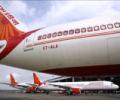
Air India has defaulted on payment of about Rs. 2,000 crore in jet fuel bills since last year.
Mangalore Refinery and Petrochemicals Ltd, a subsidiary of Oil and Natural Gas Corporation, is considering plans to increase sales of aviation turbine fuel in the domestic market and cut down on exports gradually.
The state-run oil firms will raise jet fuel price by Rs 1,338 per kl effective midnight tonight, an Indian Oil official said on Thursday.
As a result of crude oil prices falling to a four-year low of around $40 a barrel last fortnight, public sector oil companies today cut aviation turbine fuel (ATF) prices by 11 per cent. The rates will be effective this fortnight. The current rates were set on December 1. This is the seventh consecutive cut in ATF prices since September.
State oil companies have raised aviation turbine fuel (or jet fuel) prices by 2.86 per cent in line with rising international oil prices.
However, domestic carriers said they are not looking at a decrease in airfares. The cut of Rs 11,784 per kilolitre will come into effect from September 1. They also said that the industry would be able to curtail 30 per cent of its monthly losses. Indian carriers are expected to make a cumulative loss of $2 billion in 2008-09.

The price of jet fuel (ATF) was sharply increased by 7.5 per cent on Tuesday, while the cost of LPG used in commercial establishments was reduced by Rs 58.50 per cylinder, reflecting shifts in international benchmark rates. After three rounds of price cuts, aviation turbine fuel (ATF) price was increased by Rs 6,271.5 per kilolitre, or 7.5 per cent, to Rs 89,344.05 per kl in the national capital - home to one of the busiest airports in the country, according to state-owned fuel retailers.

Oil marketing companies (OMCs), paint manufacturers, tyre producers, and aviation stocks witnessed significant gains as Brent crude oil prices slipped below $70 per barrel. The price drop came after a double blow: The US imposed tariffs on Canada and Mexico, including energy imports, and OPEC+ - the group of major oil-producing nations including Russia - announced an output increase of 138,000 barrels per day, the first such hike since 2022.
